
Views:4,476
S-NONI’s Brands
上一个
下一个
From Contracting to Independent Industry Scale
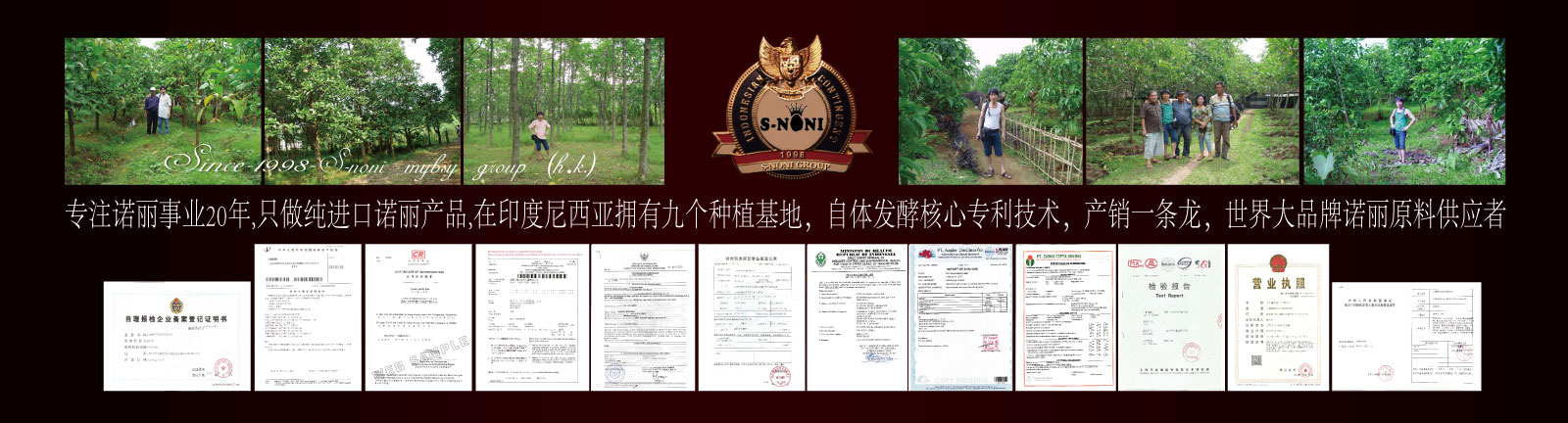
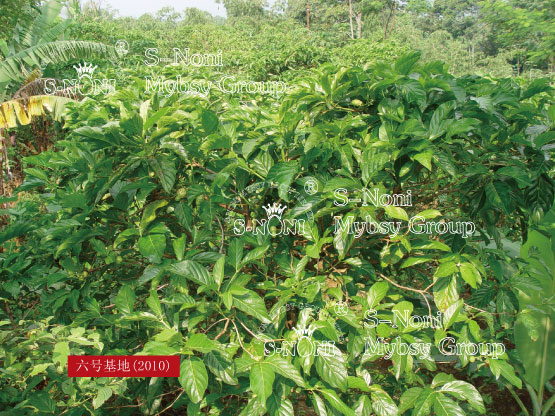
In order to integrate the major projects ,in 2015,S-NONI Group began to purchase wild planting bases of high quality,expand the second factory.So far,S-NONI has been transformed from contracting bases to its own, independent production bases.
noni factory Itself Fermentation Technology Patent

Invention Content
The present invention discloses a self-fermentation processing method for noni. The entire production flow consists of three fermentation stages with no additional raw materials added. This method preserves the intrinsic nutrients of noni fruit and eliminates risks associated with food additives. Moreover, it enables sufficient fermentation and facilitates more complete metabolic transformation of the abundant nutrients contained in noni fruits.
The technical procedure is as follows: Ripe Noni Fruit → Sorting → Washing → Drying → Baking → Whole Fruit Barrel Loading → Primary Fermentation → Secondary Fermentation, Pressing → Filtrate → Raw Noni Enzyme Stock → Tertiary Fermentation → Sterilization → Filling → Capping → Bottle Inversion → Inspection → Surface Spraying → Date Coding → Labeling → Shrink Wrapping → Outer Packaging → Final Inspection → Finished Products → Third-Party Testing
The invention delivers at least the following technical benefits and advantages:
- No additives are incorporated other than noni fruit, yielding 100% pure noni enzyme.
- Whole-fruit fermentation technology is adopted to prevent contamination introduced by fruit pulping machines.
- Three-stage self-fermentation prevents the degradation of noni fruit nutrients caused by high-temperature treatment during production.
Pure noni enzyme produced via S-NONI’s three-stage self-fermentation process possesses potent antibacterial properties thanks to its abundant active components. Notably, there is no terminal fermentation stage. Prior to filling, S-NONI’s noni enzyme retains live viable microorganisms that suppress most harmful bacteria and sustain ongoing natural self-fermentation within the product. The finished product features excellent room-temperature storage stability and develops a richer, mellower flavor with extended storage time.
Sterilization during filling adopts pasteurization at 87°C for 3 seconds. This avoids repeated degradation of native noni nutrients resulting from prolonged high-temperature sterilization in conventional filling workflows, while maximally retaining the enzyme’s natural active ingredients and product safety.
Conventional sterilization processes operating at 102–115°C for 30–50 seconds will fully deactivate noni enzyme’s active components. Boiler-based high-temperature sterilization at temperatures exceeding 115°C also completely destroys the active nutrients of noni.




 Mobile QQ/WeChat Scan

